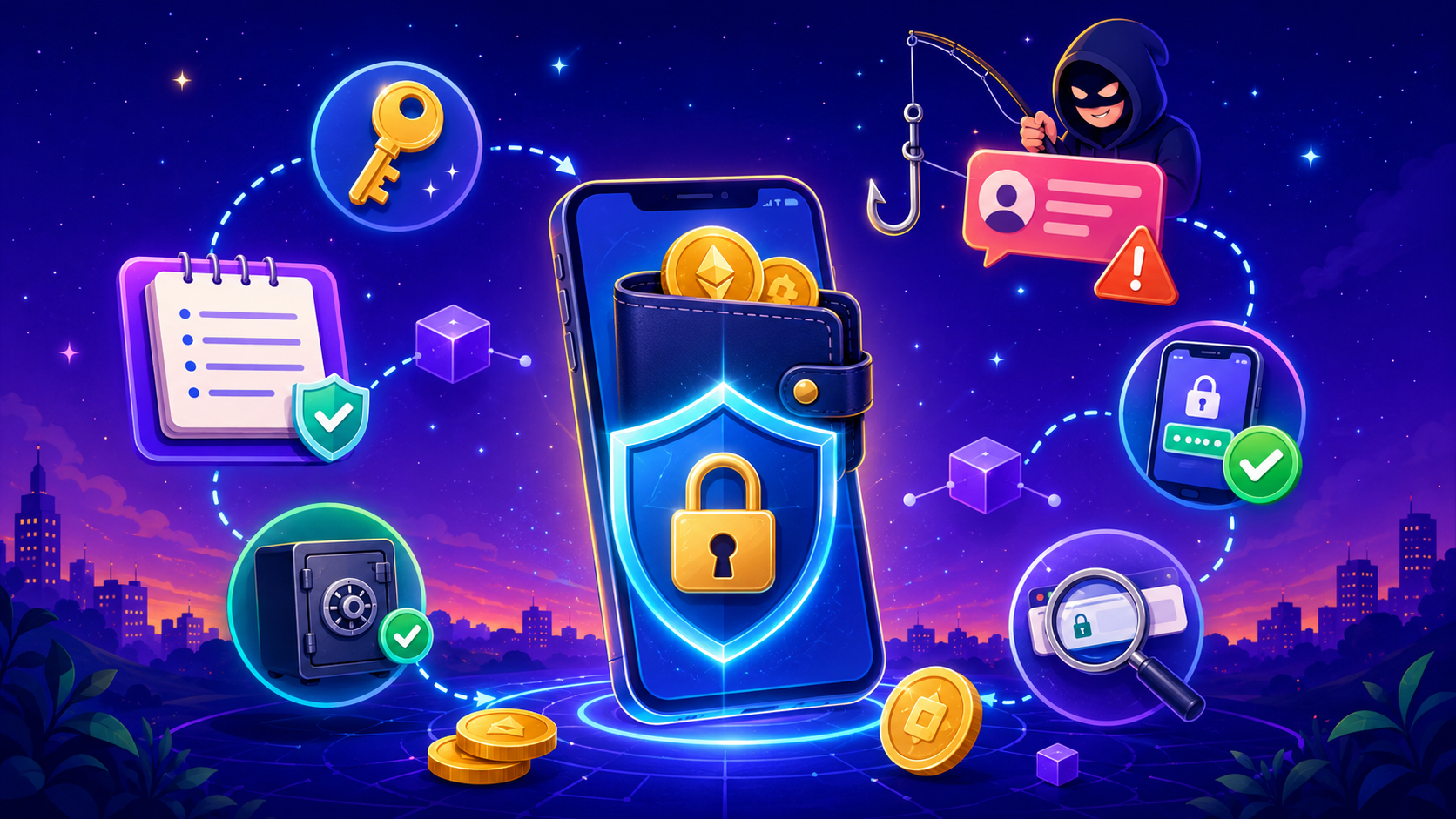
How to Keep Your Crypto Safe: A Beginner’s Guide to Wallets, Private Keys and Scams
Crypto Safety Guide
Crypto can give people more control over their money, but it also gives them more responsibility. If you lose your seed phrase, send coins to the wrong address, fall for a scam, or give away your private key, your crypto may be gone permanently.
That is why crypto security matters before profits, trading, or trying to find the next big coin. This beginner-friendly guide explains how to keep your crypto safe, how wallets and private keys work, what seed phrases are, and how to avoid common crypto scams.
Important:
This article is for education only. It is not financial advice, investment advice, or a recommendation to buy cryptocurrency. Crypto is risky, prices can be extremely volatile, and mistakes can be difficult or impossible to reverse.
Why Crypto Safety Matters
Traditional bank accounts usually have customer support, fraud checks, chargebacks and account recovery options. Crypto works differently. Many crypto transactions are irreversible, and if you send funds to the wrong address or give your recovery phrase to a scammer, there may be no simple way to get your money back.
Key idea:
In crypto, security is not something to think about later. It should come before buying, trading, staking, using wallets, or connecting to crypto apps.
What Is a Crypto Wallet?
A crypto wallet is a tool that helps you access and manage cryptocurrency on a blockchain. It can let you send crypto, receive crypto, check balances and interact with blockchain apps.
But a crypto wallet does not store coins in the same way a normal wallet stores cash. Your crypto exists on the blockchain. Your wallet gives you access to the keys that control it.
Simple example:
Think of the blockchain as a public record of ownership. Your wallet is the tool that proves you have permission to move the crypto connected to your address.
Custodial Wallets vs Non-Custodial Wallets
One of the first things beginners should understand is the difference between custodial wallets and non-custodial wallets.
Custodial wallet:
A company, usually a crypto exchange, holds the private keys for you. This can feel easier for beginners, but you are trusting the company to protect your funds and allow withdrawals.
Non-custodial wallet:
You control your own private keys. This gives you more control, but also more responsibility. If you lose your seed phrase, there may be no support team that can recover your funds.
Beginner rule:
Custodial wallets are easier, but require trust. Non-custodial wallets give more control, but require stronger personal security.
What Is a Private Key?
A private key is secret information that gives access to crypto connected to a wallet. Whoever controls the private key can control the funds.
You should never share your private key with anyone. No real exchange, wallet provider, support agent, influencer, investment manager or giveaway should ask for it.
Warning:
If someone asks for your private key, they are almost certainly trying to steal your crypto. Treat your private key like the master password to your money.
What Is a Seed Phrase?
A seed phrase, sometimes called a recovery phrase, is usually a list of 12 or 24 words that can restore access to a crypto wallet.
Your seed phrase is extremely important. If you lose your device but still have your seed phrase, you may be able to recover your wallet. But if someone else gets your seed phrase, they may be able to steal everything in that wallet.
Key point:
Your public wallet address can be shared. Your seed phrase and private key should never be shared.
How to Store Your Seed Phrase Safely
Many beginners make the mistake of storing their seed phrase in a convenient but unsafe place. Convenience can become dangerous if your phone, email, cloud storage or laptop gets hacked.
Seed phrase safety checklist:
Write it down clearly on paper.
Store it somewhere private and secure.
Consider keeping a backup in a separate safe location.
Never screenshot it.
Never email it to yourself.
Never save it in cloud notes.
Never send it in a message.
Never type it into a random website.
Big mistake:
Do not store your seed phrase as a photo on your phone. If your phone or cloud account is compromised, your wallet could be at risk.
Hot Wallets vs Cold Wallets
Crypto wallets are often described as hot wallets or cold wallets. The difference is whether the wallet is connected to the internet.
Hot wallet:
A wallet connected to the internet, such as a mobile wallet, browser wallet or exchange wallet. Hot wallets are convenient, but more exposed to online threats.
Cold wallet:
A wallet kept offline, such as a hardware wallet. Cold wallets are less convenient, but usually safer for long-term storage.
Practical setup:
Some people keep a small amount of crypto in a hot wallet for convenience and store larger long-term holdings in cold storage.
Should Beginners Use a Hardware Wallet?
A hardware wallet can be useful if you hold a meaningful amount of crypto and want more control over your private keys. It keeps keys offline and can reduce the risk of malware stealing them from your computer or phone.
However, hardware wallets still require care. You need to buy from a trusted source, set it up properly, protect your recovery phrase and avoid fake wallet apps or phishing websites.
Warning:
Never buy a hardware wallet from a random seller if you are not sure it is safe. A tampered device or fake setup process could put your crypto at risk.
Do Not Keep Too Much Crypto on an Exchange
Crypto exchanges are useful for buying, selling and trading. But if you leave all your crypto on an exchange, you are trusting that platform with your funds.
If an exchange freezes withdrawals, gets hacked, fails financially, or locks your account, you may not have full control over your crypto.
Simple rule:
An exchange can be convenient for small amounts and beginners, but it is worth learning self-custody before storing larger long-term holdings.
Common Crypto Scams Beginners Should Know
Crypto scams are common because transactions can be fast, global and difficult to reverse. Scammers often target beginners who do not fully understand wallets, exchanges and blockchain transactions.
- Fake investment platforms promising guaranteed returns.
- Romance scams where someone builds trust before pushing a crypto investment.
- Fake support agents asking for your seed phrase.
- Phishing websites that copy real exchanges or wallet apps.
- Giveaway scams claiming you will receive more crypto if you send some first.
- Pump-and-dump groups promoting low-quality coins.
- Recovery scams where someone claims they can recover stolen crypto for an upfront fee.
Major red flag:
Anyone promising guaranteed crypto profits, risk-free returns, or quick easy money is not someone you should trust.
Red Flags That a Crypto Offer Might Be a Scam
Scams often use pressure, emotion and fake urgency. If something feels rushed, secretive or too good to be true, slow down.
Crypto scam red flags:
Someone promises guaranteed profits.
You are pressured to act quickly.
You are told there is little or no risk.
A stranger online gives you investment advice.
You are asked to send crypto to unlock withdrawals.
You are asked for your seed phrase or private key.
The website URL looks slightly different from the real one.
You cannot clearly explain how the investment makes money.
How to Avoid Phishing Attacks
Phishing is when scammers trick you into entering sensitive information on a fake website, fake app or fake message. In crypto, phishing is especially dangerous because entering your seed phrase into a fake site can give scammers full access to your funds.
Phishing protection checklist:
Bookmark official websites.
Check URLs carefully before logging in.
Do not click random links from emails, texts, Discord, Telegram or social media.
Download wallet apps only from official sources.
Ignore direct messages from people claiming to be support staff.
Never enter your seed phrase because someone online told you to.
Example:
A scammer sends you a link that looks like a real exchange login page. You enter your details, and they use them to access your account. Always check the URL before logging in.
Use Two-Factor Authentication on Crypto Accounts
If you use a crypto exchange, turn on two-factor authentication. This adds an extra layer of protection so that a password alone is not enough to access your account.
An authenticator app is usually safer than SMS verification because phone numbers can be targeted through SIM swap attacks.
Security habit:
Use a strong unique password for every exchange account and turn on two-factor authentication wherever possible.
Be Careful When Sending Crypto
Crypto transactions are usually irreversible. If you send funds to the wrong address, wrong network, or a scammer’s wallet, you may not be able to get them back.
Before sending crypto:
Double-check the wallet address.
Make sure you are using the correct blockchain network.
Send a small test transaction first when moving a large amount.
Do not copy wallet addresses from random messages.
Check that malware has not replaced the address you copied.
Beginner mistake:
Sending crypto on the wrong network can cause serious problems. Always check both the asset and the network before confirming a transfer.
Create a Simple Crypto Security Checklist
Crypto security does not need to be complicated. A basic checklist can help you avoid the biggest mistakes.
Beginner crypto security checklist:
Use strong unique passwords.
Turn on two-factor authentication.
Protect your seed phrase offline.
Never share private keys.
Use official websites and apps.
Keep software updated.
Beware of guaranteed returns.
Send a test transaction first.
Use cold storage for larger long-term holdings.
Do not invest because of hype, pressure or fear of missing out.
What to Do If You Think You Have Been Scammed
If you think you have been scammed, act quickly. Stop sending money, save evidence, take screenshots, record wallet addresses and transaction IDs, change passwords, secure your accounts and report the scam to the relevant authorities in your country.
Watch out:
Be careful of recovery scams. After someone loses crypto, another scammer may claim they can recover it for a fee. This can lead to losing even more money.
How Much Crypto Should Beginners Keep in a Wallet?
There is no perfect amount for everyone. A simple beginner rule is to keep only small amounts in hot wallets or exchanges and use stronger security for larger long-term holdings.
You should also think about your wider financial situation. Crypto should not replace an emergency fund, rent money, debt payments, or essential savings.
Financial safety rule:
Do not put money into crypto that you need for bills, debt payments, rent, food, emergency savings or short-term goals.
Is Crypto Safe?
Crypto can be used safely, but it is not risk-free. Beginners face risks from scams, price volatility, exchange failures, wallet mistakes, phishing, fake apps and poor security habits.
The safer approach is to learn first, start small, avoid hype and never rush into decisions because of social media pressure.
The safest crypto users are not the ones chasing every trend. They are the ones who understand wallets, seed phrases, private keys, scams and transaction risks before moving serious money.
FAQs About Keeping Crypto Safe
Can someone steal my crypto with my wallet address?
Usually, no. Your public wallet address is used to receive crypto. The dangerous information is your private key or seed phrase. Never share those.
Should I store my seed phrase on my phone?
It is safer not to. Phones can be lost, hacked, backed up to cloud services or accessed by malicious apps. Offline storage is usually safer.
Are crypto exchanges safe?
Some exchanges are more trusted than others, but no platform is risk-free. If you keep crypto on an exchange, use strong security and understand that you are trusting a third party.
What is the safest wallet for beginners?
The safest wallet depends on your needs. A beginner may start with a trusted exchange or simple wallet for small amounts, then learn about hardware wallets and cold storage for larger holdings.
Can stolen crypto be recovered?
Sometimes authorities or platforms may help, but in many cases stolen crypto is difficult or impossible to recover. Prevention is much easier than recovery.
Final Thoughts: Learn Security Before Chasing Profits
The most important crypto lesson is simple: protect your access before you think about profits. One careless mistake with a seed phrase, private key or wallet address can be expensive.
Start small, learn slowly, use trusted tools, avoid guaranteed-return promises and never share your recovery phrase. In crypto, security should always come first.
Related guides: What Is Bitcoin and How Does It Work?, What Is a Crypto Wallet?, and Blockchain Explained for Beginners.
Helpful resources: FTC guide to cryptocurrency scams, CFTC digital asset fraud guidance, and FBI cryptocurrency investment fraud guide.