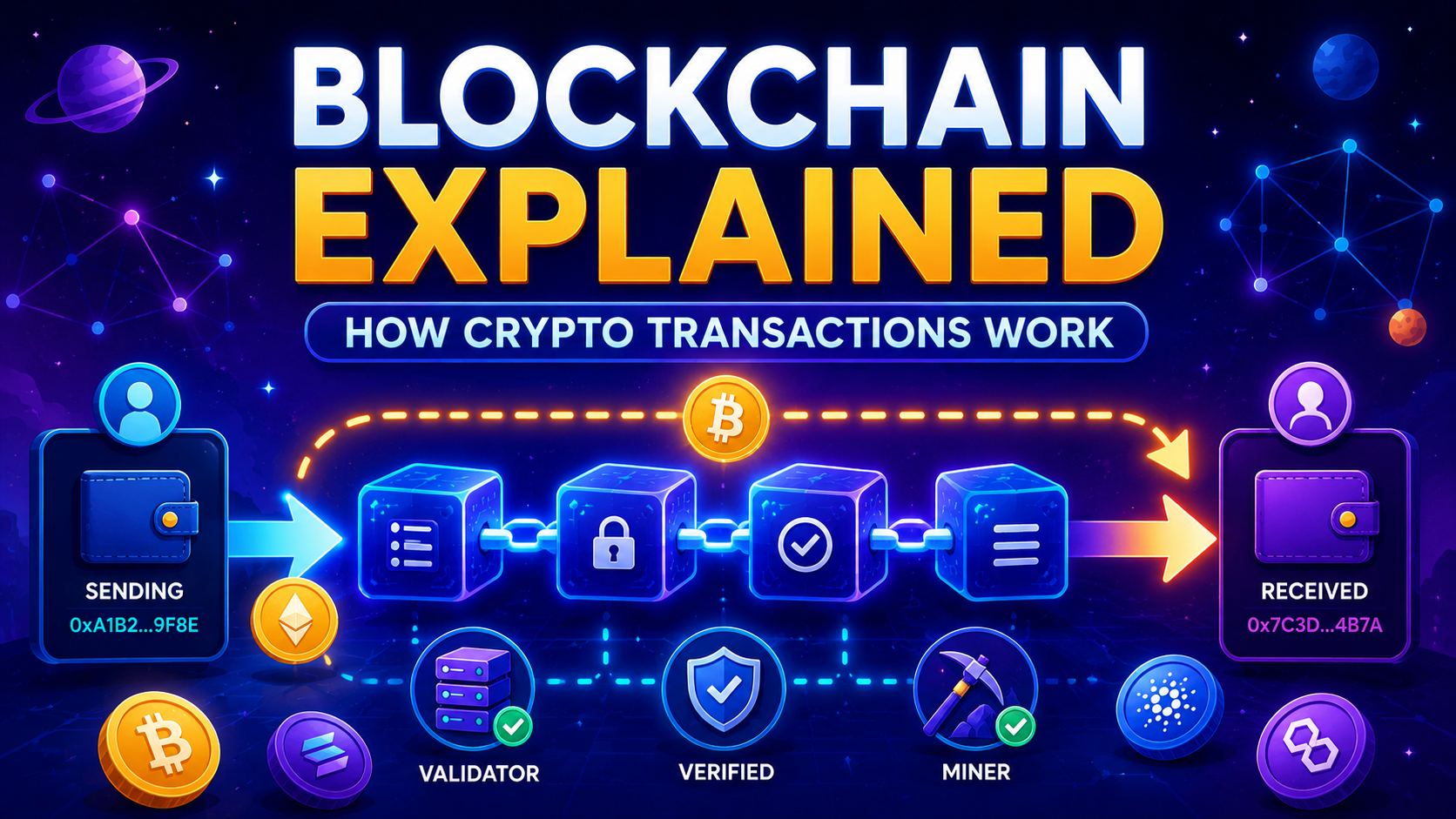
Blockchain Explained for Beginners: How Crypto Transactions Work
Crypto Beginner Guide
Blockchain is the technology behind cryptocurrencies like Bitcoin and Ethereum. It can sound complicated at first, but the basic idea is simple: a blockchain is a shared digital record that many computers can check, update and verify without needing one central company to control everything.
If you are new to crypto, understanding blockchain will make everything else easier. Wallets, transactions, miners, validators, private keys, Bitcoin, Ethereum and smart contracts all make more sense once you understand how a blockchain works.
Important:
This article is for education only. It is not financial advice, investment advice, or a recommendation to buy cryptocurrency. Crypto can be risky, volatile and difficult to recover if mistakes are made.
What Is Blockchain?
A blockchain is a digital record of transactions. Instead of being stored in one central place, copies of the record are shared across many computers in a network.
The word blockchain comes from the way the data is organised. Transactions are grouped into blocks, and those blocks are linked together in order, creating a chain of blocks.
Simple meaning:
A blockchain is a shared digital record that lets a network agree on what happened, who owns what, and which transactions are valid.
The Simple Blockchain Explanation
Imagine a notebook that records every transaction. Instead of one person holding the notebook, thousands of people have a copy. When a new transaction happens, the network checks whether it is valid, then updates everyone’s copy.
Simple example:
If Ali sends 0.01 Bitcoin to Sara, the Bitcoin network checks whether Ali actually has the Bitcoin, confirms the transaction follows the rules, and then records it on the blockchain.
Basic blockchain process:
A transaction is created.
The network checks whether it is valid.
Valid transactions are grouped into a block.
The block is added to the chain.
The updated blockchain is shared across the network.
Why Was Blockchain Created?
Blockchain became widely known because of Bitcoin. Bitcoin was designed as a way to send digital money without relying on a bank, payment company or central authority to approve every transaction.
Before blockchain, one of the biggest problems with digital money was double spending. This means someone could try to spend the same digital money more than once. Blockchain helps solve this by keeping a shared record of ownership and transactions.
Why it matters:
Blockchain allows digital value to move between people without every transaction needing to be approved by one central middleman.
What Is a Block?
A block is a bundle of transaction data. In simple terms, it is like a page in the blockchain’s record book.
A block usually contains transaction information, a timestamp and a reference to the previous block. That reference is what links blocks together and creates the chain.
Think of it like this:
One block is like one page of records. The blockchain is the whole book, with every page connected in order.
What Is a Crypto Transaction?
A crypto transaction is a transfer of cryptocurrency from one wallet address to another. For example, if you send Bitcoin to someone, you are creating a transaction that tells the Bitcoin network to move value from your address to their address.
The transaction must be checked by the network before it is accepted. The network needs to confirm that you have the funds and that the transaction follows the rules of that blockchain.
Important:
Crypto transactions are usually difficult or impossible to reverse. Always double-check the wallet address, amount and blockchain network before sending.
How Does a Blockchain Transaction Work?
The exact process can vary between blockchains, but the beginner version is fairly simple.
How a crypto transaction works:
You open your crypto wallet.
You enter the recipient’s wallet address.
You choose how much crypto to send.
Your wallet signs the transaction using your private key.
The transaction is broadcast to the network.
The network checks whether it is valid.
The transaction is added to a block.
The block is confirmed and added to the blockchain.
Key idea:
Your wallet does not send crypto in the same way a bank app sends normal money. It signs a transaction that the blockchain network can verify.
What Are Nodes?
Nodes are computers that help run a blockchain network. They can store copies of the blockchain, check transactions and help keep the network honest.
A blockchain does not rely on one single computer. Instead, many nodes work together. This is part of what makes public blockchains different from normal centralised databases.
Centralised database:
One company or organisation controls the main record.
Blockchain network:
Many computers hold and check copies of the record.
What Does Decentralised Mean?
Decentralised means control is spread across a network instead of being held by one central company, bank or government.
For example, a normal bank database is controlled by the bank. A public blockchain like Bitcoin is maintained by a network of participants who follow the same rules.
Simple meaning:
Decentralisation means there is no single boss controlling the whole network. The network follows shared rules instead.
Trade-off:
Decentralisation can give users more control, but it also gives users more responsibility. If you lose your wallet access or send crypto to the wrong address, there may not be a support team that can reverse the mistake.
What Are Miners?
Miners are participants in some blockchain networks who help verify transactions and add new blocks to the blockchain. Bitcoin uses a system called proof of work, where miners use computing power to compete to add the next block.
Mining helps secure the network because it makes it expensive and difficult to attack or rewrite the blockchain.
Simple example:
Bitcoin miners use powerful computers to compete for the right to add the next block. The winning miner adds the block and receives a reward according to the network’s rules.
What Are Validators?
Some blockchains do not use mining. Instead, they use validators. Validators help confirm transactions and add blocks by locking up, or staking, cryptocurrency as part of the network’s security process.
Ethereum is an example of a major blockchain that uses proof of stake rather than proof of work. The main idea is still similar: the network needs a way to agree on which transactions are valid.
Key idea:
Miners and validators are different, but they both help blockchain networks agree on valid transactions.
Proof of Work vs Proof of Stake
Proof of work and proof of stake are two different ways blockchains can reach agreement. This agreement process is called consensus.
Proof of work:
Uses computing power to secure the network. Bitcoin is the most famous example.
Proof of stake:
Uses validators who lock up crypto to help secure the network. Ethereum uses proof of stake.
Both systems are designed to help the network agree on valid transactions, but they use different methods.
Why Are Blockchain Transactions Hard to Change?
Each block is linked to the block before it. If someone tries to change old transaction data, it can break the chain and create a mismatch with the copies held by the rest of the network.
Because many computers keep copies of the blockchain, changing history would usually require controlling a large part of the network. On major blockchains, this can be extremely difficult and expensive.
Why this matters:
Blockchains are designed to make recorded transactions difficult to secretly change. This is one reason people describe them as tamper-resistant.
Is Blockchain Anonymous?
Blockchain is often misunderstood as completely anonymous. In reality, many public blockchains are more transparent than people think.
Wallet addresses may not show your real name directly, but transactions can often be seen publicly. If a wallet address is linked to a person, exchange account or identity, past transactions may become easier to trace.
Anonymous:
Your identity is completely hidden.
Pseudonymous:
Your name may not be shown, but your wallet address and transactions may still be visible.
Blockchain vs Banks: What Is the Difference?
A bank keeps its own private records and controls customer accounts. A public blockchain keeps a shared record across a network of computers.
Banks can usually reverse payments, freeze accounts, help with fraud and provide customer support. Public blockchains often give users more direct control, but with fewer safety nets.
Bank system:
Centralised, controlled by financial institutions, often includes customer support and fraud protection.
Public blockchain:
Usually decentralised, maintained by a network, gives users more direct control but fewer recovery options.
What Is a Smart Contract?
A smart contract is a program that runs on a blockchain. It can automatically follow rules when certain conditions are met.
Smart contracts are used in many blockchain applications, including decentralised finance, NFTs, token swaps, blockchain games and other crypto services.
Simple example:
A smart contract could automatically swap one token for another when a user confirms the transaction, without needing a traditional broker or bank to process it.
Warning:
Smart contracts can have bugs, security risks and scams. Beginners should be careful before connecting wallets to apps they do not understand.
What Can Blockchain Be Used For?
Crypto payments are the most famous use case, but blockchain can be used for more than sending coins.
- Digital money and peer-to-peer payments.
- Decentralised finance applications.
- Stablecoins.
- Digital ownership and NFTs.
- Supply chain tracking.
- Tokenised assets.
- Identity systems.
- Blockchain games and digital collectibles.
Important:
Not every blockchain idea is useful. Some projects have real use cases, while others are speculative, overhyped or unnecessary. Beginners should separate real utility from marketing.
What Are Blockchain Fees?
Many blockchains charge transaction fees. These fees help pay the network participants who process transactions and help protect the network from spam.
Fees can change depending on network demand. When a network is busy, fees may become more expensive. This is why sending crypto can sometimes cost more during periods of high activity.
Before sending crypto:
Always check the transaction fee. A transaction can become expensive when the network is busy.
What Does Confirmation Mean?
A confirmation means a transaction has been included in a block and accepted by the network. Some services wait for multiple confirmations before treating a transaction as final.
More confirmations usually mean the transaction is harder to reverse or reorganise, especially on major blockchains.
Example:
If you deposit crypto into an exchange, the exchange may wait for several confirmations before showing the funds as available in your account.
Common Blockchain Mistakes Beginners Make
Most beginner mistakes happen because people rush into crypto before understanding how transactions, wallets and networks work.
- Thinking blockchain transactions can always be reversed.
- Sending crypto to the wrong wallet address.
- Using the wrong blockchain network.
- Confusing public addresses with private keys.
- Believing all blockchain projects are safe or useful.
- Clicking fake wallet or exchange links.
- Connecting a wallet to apps without understanding the risks.
- Ignoring transaction fees before sending funds.
Biggest beginner mistake:
Treating crypto like a normal banking app. With crypto, you often have more control, but also fewer safety nets if something goes wrong.
Is Blockchain Safe?
A major blockchain can be secure at the network level, but that does not mean every crypto user is safe. Many losses happen because of scams, phishing, fake apps, exchange failures, wallet mistakes or risky projects.
The technology can be strong, but users still need good security habits. Understanding wallets, seed phrases, private keys and transaction risks is essential.
Blockchain can be powerful, but it does not protect you from every mistake. Learning how wallets, transactions, fees, private keys and scams work is just as important as understanding the technology itself.
Blockchain Safety Checklist for Beginners
Beginner safety checklist:
Learn how wallets and private keys work before moving large amounts.
Never share your seed phrase.
Double-check wallet addresses before sending crypto.
Check the correct blockchain network.
Send a small test transaction first.
Use trusted wallets and official websites.
Avoid guaranteed-return crypto offers.
Do not connect your wallet to random apps.
Understand fees before making transactions.
Keep learning before investing serious money.
FAQs About Blockchain
Is blockchain the same as Bitcoin?
No. Bitcoin is a cryptocurrency that uses blockchain technology. Blockchain is the underlying system that records transactions.
Can blockchain be hacked?
Major blockchains can be very difficult to attack, but users, exchanges, wallets and apps can still be hacked or scammed. Many crypto losses happen because of human error or poor security.
Are blockchain transactions private?
Many public blockchains are transparent. Wallet addresses may not show names directly, but transactions can often be viewed publicly.
Why do crypto transactions have fees?
Fees help process transactions, reward network participants and reduce spam. Fees can rise when a blockchain is busy.
Do I need to understand blockchain before buying crypto?
You do not need to understand every technical detail, but you should understand the basics of wallets, transactions, private keys, fees and scams before using crypto.
Final Thoughts: Blockchain Is Simple Once You Understand the Basics
Blockchain can sound technical, but the beginner idea is simple: it is a shared digital record that many computers can verify. It allows crypto transactions to happen without one central company controlling the whole system.
Before focusing on price predictions or trending coins, learn the basics. Understanding blockchain, wallets, private keys and transaction safety can help you avoid mistakes and make smarter decisions around crypto.
Related guides: What Is Bitcoin and How Does It Work?, What Is a Crypto Wallet?, and How to Keep Your Crypto Safe.
Helpful resources: Bitcoin whitepaper, Ethereum.org beginner guide, and Investopedia blockchain explanation.