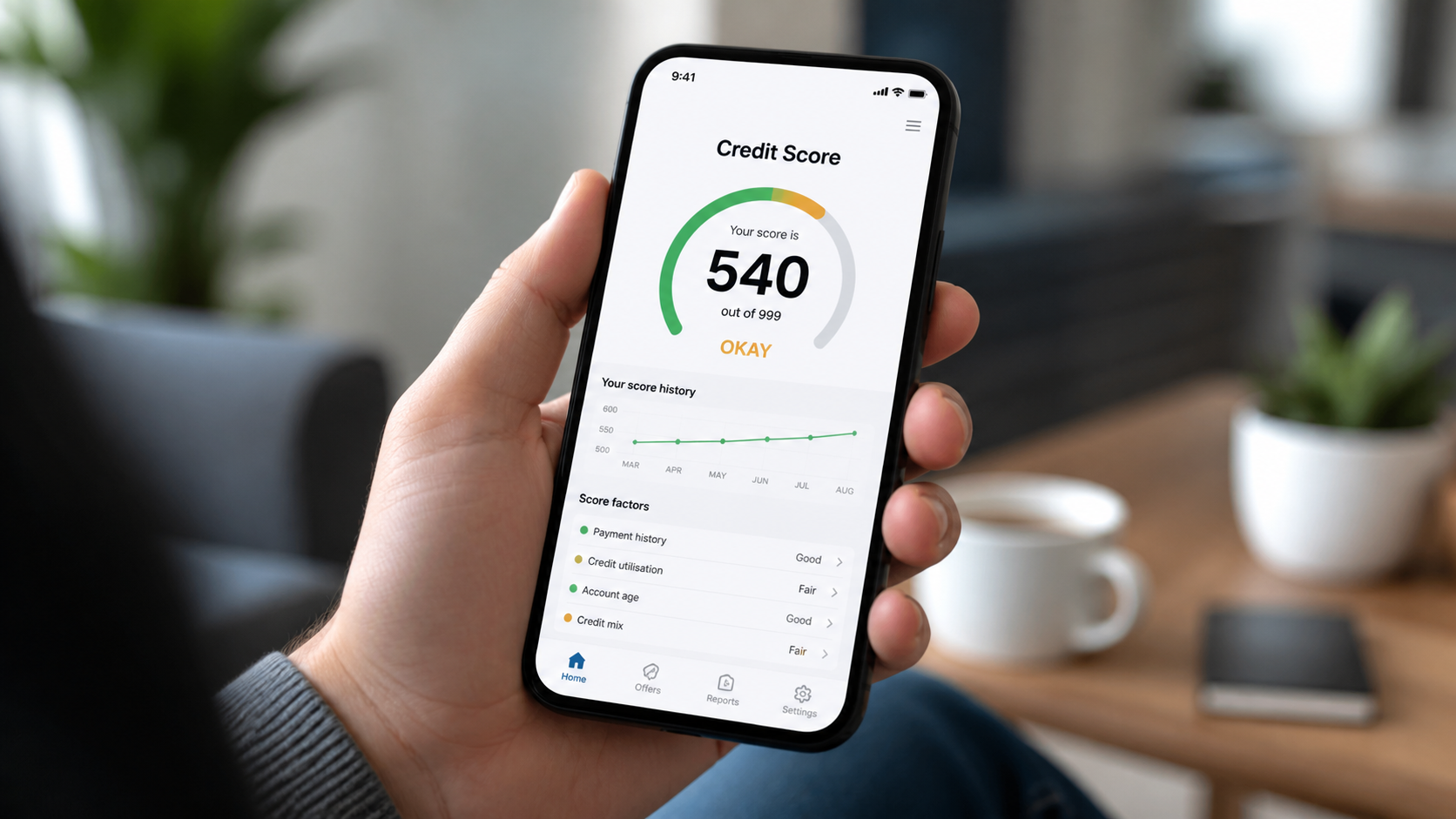
How to Improve Your Credit Score in the UK: A Beginner’s Guide
Savings & Debt Guide
Improving your credit score in the UK is not about one quick trick. It is about building a reliable financial record that helps lenders feel more confident when you apply for credit.
Your credit score can affect your chances of being accepted for credit cards, loans, car finance, mobile phone contracts, mortgages, and sometimes other financial products. But many people misunderstand what a credit score actually is and how lenders use it.
Think about it:
If a lender is deciding whether to let you borrow money, what would they want to know? They would probably want to see whether you have borrowed before, whether you paid on time, how much debt you already have, and whether your details look stable.
Official UK credit links you may need
Useful links:
MoneyHelper: How to improve your credit score
MoneyHelper: How to check your credit report for free
ICO: Credit reports and your rights
Citizens Advice: How lenders decide whether to give you credit
GOV.UK: Register to vote
What you will learn
- What a credit score is
- The difference between a credit score and a credit report
- How lenders use your credit history
- How to check your credit report for free
- Why registering to vote can help
- How to fix mistakes on your credit file
- Why missed payments damage your score
- How credit utilisation works
- How to build credit if you have little history
- Common mistakes that can hurt your credit score
Important:
This guide is educational only and is not personal financial advice. Credit scoring rules can vary between lenders and credit reference agencies. Always check your own report and use official guidance if you are unsure.
What is a credit score?
A credit score is a number that gives a general indication of how lenders may view your creditworthiness. It is based on information in your credit report, such as your borrowing history, repayments, account activity, and public record information.
However, your credit score is not the only thing lenders look at. A lender may also consider your income, affordability, employment situation, existing debts, and the type of product you are applying for.
Key idea:
A high credit score can help, but it does not guarantee approval. Each lender has its own rules and risk checks.
Credit score vs credit report
Your credit report is the detailed file that contains information about your credit activity. Your credit score is a number created from the information in that report.
Credit report:
The detailed record of your borrowing, repayments, accounts, applications, addresses, and certain public records.
Credit score:
A number that summarises how your credit report may look to lenders, depending on the scoring system used.
Check your understanding:
Is your credit score the same as your credit report?
Answer: No. Your credit report is the detailed file. Your credit score is a number based on that file.
Why your credit score matters
Your credit score and credit report can affect how lenders view you when you apply for borrowing. This can matter when applying for a credit card, loan, mortgage, overdraft, car finance, phone contract, or some buy now pay later products.
A stronger credit profile may improve your chances of being accepted and may help you access better rates. A weaker credit profile may lead to rejection, lower credit limits, higher interest rates, or fewer options.
Your credit score matters because it can influence both whether you are accepted and how expensive borrowing may be.
Step 1: Check your credit report for free
The first step is to check your credit report. Do not guess what lenders can see. Look at the actual information held about you.
In the UK, credit reference agencies must provide a statutory credit report for free. Checking your own report does not damage your credit score, so you can review it without worrying that it will count against you.
Do this first:
Use MoneyHelper’s official guide here: How to check your credit report for free.
- Check your personal details
- Check your address history
- Check your open and closed accounts
- Check missed payments or defaults
- Check hard searches
- Check linked financial associations
- Check for accounts you do not recognise
Important:
If you see credit accounts you do not recognise, investigate quickly. It could be an error, but it could also be a sign of fraud or identity misuse.
Step 2: Understand what lenders are looking for
Lenders want to know how risky it may be to lend to you. They look at your credit file to understand how you have handled money and borrowing in the past.
They may consider whether you pay on time, whether you already have a lot of debt, whether you apply for credit often, whether your address history is stable, and whether your details match your application.
Key idea:
Your credit file is not about proving you are rich. It is about showing whether you are reliable and whether borrowing looks affordable.
Helpful link:
Read Citizens Advice’s guide here: How lenders decide whether to give you credit.
Step 3: Register to vote
Being on the electoral register can help lenders confirm your name and address. This can make identity checks easier when you apply for credit.
If you are eligible and not registered, it is worth doing. If you move house, you usually need to update your details by registering again with your new address.
Official link:
Register or update your details here: Register to vote on GOV.UK.
Check your understanding:
Can being registered to vote help with credit checks?
Answer: Yes, because it can help lenders and credit reference agencies confirm your identity and address.
Step 4: Fix mistakes on your credit report
Mistakes on your credit report can hurt your chances, so check carefully. Errors might include wrong addresses, incorrect missed payments, accounts that are not yours, or old information that should not be there.
If you find an error, contact the credit reference agency and ask them to investigate. You may also need to contact the company that supplied the information.
Key idea:
You have the right to challenge inaccurate information. Do not ignore mistakes just because the process feels annoying.
Helpful link:
Use the ICO’s credit guidance to understand your rights: ICO credit guidance.
Step 5: Pay bills and debts on time
Payment history is one of the most important parts of your credit profile. Paying on time shows lenders that you can manage commitments reliably.
Missed payments can damage your credit score and stay visible on your credit file for years. Even one missed payment can make future lenders more cautious.
The simplest way to protect your credit score is to pay every bill and debt on time, every month.
- Set up Direct Debits where possible
- Keep payment dates in your calendar
- Make sure money is available before the due date
- Contact lenders early if you cannot pay
- Do not ignore letters, emails, or missed payment warnings
Common mistake:
Some people only focus on credit cards and loans, but missed payments on phone contracts, utilities, or other regular commitments may also affect your credit file.
Step 6: Keep credit utilisation low
Credit utilisation means how much of your available credit you are using. For example, if you have a credit card limit of £1,000 and you owe £700, your utilisation is 70% on that card.
High utilisation can make lenders think you rely heavily on credit, even if you have not missed payments. Lower utilisation can make your borrowing look more controlled.
Simple example:
If two people both have a £1,000 credit limit, the person using £150 may look less stretched than the person using £950.
Try this:
Look at each credit card balance and compare it with the limit. If one card is close to maxed out, reducing that balance could help your credit profile over time.
Step 7: Avoid too many hard searches
A hard search usually happens when you apply for a credit product such as a loan, credit card, mortgage, or some phone contracts. Lenders can see hard searches on your credit report.
Too many hard searches in a short time can make it look like you are desperate for credit or struggling financially. This may make lenders more cautious.
Soft search:
Usually used for checking eligibility or checking your own report. It does not normally affect your score.
Hard search:
Usually happens when you apply for credit. Lenders can see it, and too many in a short period can hurt your chances.
Beginner tip:
Use eligibility checkers where possible before applying. They can help you estimate your chances without making lots of full applications.
Step 8: Build credit history if your file is thin
Some people have a low or limited credit score not because they have made mistakes, but because they have very little credit history. This is sometimes called a thin credit file.
If lenders cannot see much history, they may find it harder to judge risk. Building credit slowly and responsibly can help.
- Open and manage a current account responsibly
- Pay regular bills on time
- Consider a credit-building product only if you understand the costs and risks
- Keep balances low
- Avoid applying for too many products at once
- Use credit only if you can repay it
Important:
Do not borrow money just to improve your credit score if you cannot afford the repayments. Building credit should never put you into financial trouble.
Step 9: Keep old accounts open only if they help
Older accounts can sometimes help because they show a longer history of managing credit. But this does not mean you should keep every account open forever.
If an account has fees, tempts you into debt, or creates risk, closing it may still be sensible. The goal is not to keep credit for the sake of it. The goal is to manage your credit profile responsibly.
Think about it:
An old account with a good payment history may help your profile, but an account that encourages overspending can hurt your finances.
Step 10: Deal with missed payments, defaults or CCJs
If you already have missed payments, defaults, or a County Court Judgment, improving your credit score may take more time. The important thing is to stop the problem getting worse.
Start by making current payments on time, contacting lenders if you are struggling, and getting debt advice if repayments feel unmanageable. Over time, newer positive behaviour can help your profile recover.
Important:
If debt feels unmanageable, do not ignore it. Getting help early is better than waiting until charges, missed payments, or court action make things worse.
Helpful link:
MoneyHelper has guidance on dealing with debt and CCJs. Start here: MoneyHelper: County Court Judgments.
Step 11: Check financial associations
A financial association can appear when you have a joint financial product with someone, such as a joint loan, joint mortgage, or joint bank account with credit facilities.
If you are financially linked to someone with poor credit history, it may affect how lenders view your application. If the association is no longer correct, you may be able to ask the credit reference agency about removing it.
Key idea:
Check whether your credit report links you to anyone financially. If the link is wrong or outdated, investigate it.
Step 12: Avoid borrowing just before a major application
If you plan to apply for a mortgage, car finance, or another major credit product, be careful about applying for new credit shortly before it.
New hard searches, new debts, or higher balances can change how lenders assess you. It may be better to keep your finances stable before an important application.
Simple example:
If you are preparing for a mortgage application, taking out new credit cards or loans shortly before applying could make your affordability look weaker.
Step 13: Do not fall for credit repair scams
Be careful with companies or people promising to instantly fix your credit score. Accurate negative information usually cannot simply be removed just because you want it gone.
You can challenge incorrect information, but accurate missed payments, defaults, or court records may remain visible for a set period. Real credit improvement usually takes time and consistent behaviour.
Red flag:
Be cautious if someone promises guaranteed approval, instant score repair, or the removal of accurate negative information for a fee.
Step 14: Track your progress monthly
Credit improvement is usually slow. Scores can move up and down, and different agencies may show different numbers. That is normal.
Instead of obsessing over the number every day, track the habits that influence it: paying on time, lowering balances, avoiding unnecessary applications, and keeping your report accurate.
Try this:
Once a month, check your balances, payment history, hard searches, and any report changes. Focus on progress, not perfection.
How long does it take to improve your credit score?
It depends on what is holding your score back. If the issue is a simple mistake on your report, fixing it may help once the correction is processed. If the issue is missed payments, defaults, or high debt, improvement may take longer.
The best approach is to focus on actions you can control: pay on time, reduce debt, keep utilisation sensible, avoid unnecessary hard searches, and keep your details accurate.
Credit score improvement is usually a process, not an event. The habits you repeat every month matter more than one quick fix.
Common mistakes that hurt your credit score
- Missing payments
- Using too much of your available credit
- Applying for too many credit products in a short time
- Ignoring mistakes on your credit report
- Not registering to vote when eligible
- Moving frequently without updating addresses properly
- Taking on debt you cannot afford
- Closing accounts without understanding the effect
- Ignoring letters from lenders or debt collectors
- Falling for credit repair scams
Common mistake:
Some people only check their credit score after being rejected. It is better to check your credit report before applying, so you can spot issues early.
A simple credit score action plan
- Check your credit report for free
- Look for mistakes or accounts you do not recognise
- Register to vote if you are eligible
- Set up reminders or Direct Debits for payments
- Pay every bill and debt on time
- Reduce credit card balances where possible
- Avoid unnecessary hard searches
- Use eligibility checkers before applying
- Build credit slowly if your file is thin
- Review your progress once a month
Beginner takeaway:
You improve your credit profile by becoming easier for lenders to trust: accurate details, stable records, on-time payments, controlled borrowing, and fewer signs of financial stress.
Quick recap
- A credit report is the detailed file lenders may check
- A credit score is a number based on credit report information
- Checking your own credit report does not hurt your score
- Registering to vote can help confirm your identity and address
- Mistakes should be challenged with the credit reference agency
- Paying on time is one of the most important habits
- High credit utilisation can make you look stretched
- Too many hard searches can hurt your chances
- Credit improvement takes time and consistency
Mini quiz
Question 1:
Does checking your own credit report usually damage your credit score?
Answer: No. Checking your own report is usually a soft search and does not affect your score.
Question 2:
What is credit utilisation?
Answer: It is how much of your available credit you are using.
Question 3:
Why can registering to vote help your credit profile?
Answer: It can help lenders confirm your identity and address.
Question 4:
Does a high credit score guarantee you will be accepted?
Answer: No. Lenders use their own criteria and may also consider affordability, income, existing debts, and the product you apply for.
Final thoughts
Improving your credit score in the UK is about building a stronger, more reliable financial record. You do that by checking your report, fixing errors, paying on time, keeping borrowing under control, and avoiding unnecessary applications.
The best credit score strategy is simple: be accurate, be consistent, pay on time, borrow carefully, and give your record time to improve.
If you treat your credit profile as something to manage regularly, rather than something to panic about only when you need a loan, you put yourself in a stronger position for future financial decisions.