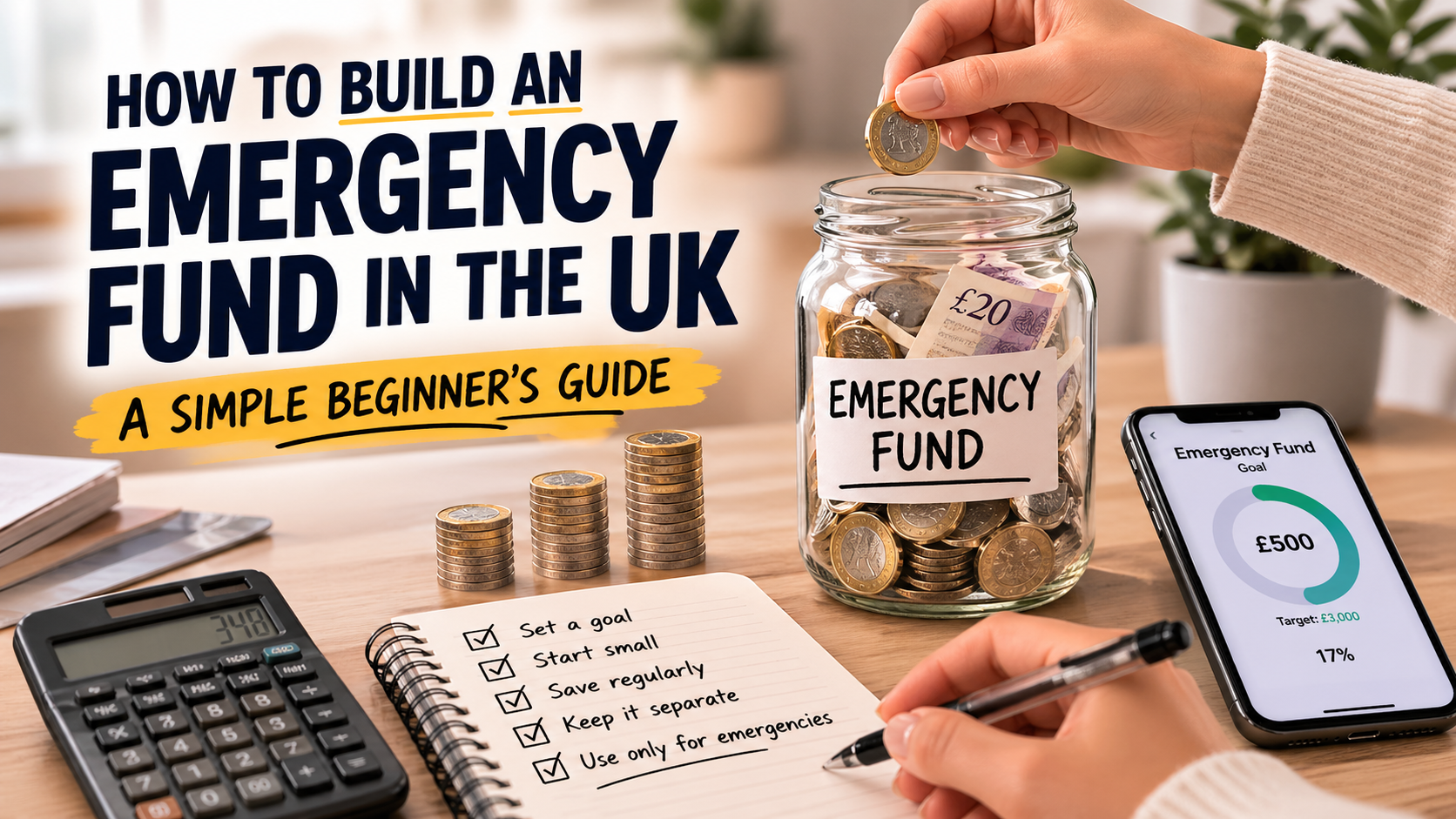
How to Build an Emergency Fund in the UK: A Simple Beginner’s Guide
Savings & Debt Guide
An emergency fund is money set aside for unexpected costs. It helps stop a surprise bill, job problem, car repair, or urgent expense from turning into new debt.
Many people know they should save money, but they are not sure where to start. The idea of saving thousands of pounds can feel impossible, especially when bills, rent, food, transport, and debt payments already take up most of your income.
Think about it:
If your washing machine broke tomorrow, your car needed a repair, or your hours at work were reduced, would you be able to handle it without using a credit card, overdraft, loan, or borrowing from someone else?
Official UK savings links you may need
Useful links:
MoneyHelper: Emergency savings — how much is enough?
MoneyHelper: Saving money to boost your budget
MoneyHelper: Beginner’s guide to managing your money
MoneyHelper: Managing money using savings pots
GOV.UK: Help to Save scheme
What you will learn
- What an emergency fund is
- Why emergency savings matter
- How much you should aim to save
- How to start if you have no savings
- Where to keep emergency money
- What counts as a real emergency
- How to build savings while paying off debt
- How to use savings pots
- Common emergency fund mistakes to avoid
Important:
This guide is educational only and is not personal financial advice. Your ideal emergency fund depends on your income, bills, debt, job security, dependants, health, housing situation, and personal responsibilities.
What is an emergency fund?
An emergency fund is money you keep separate from everyday spending. It is there for genuine unexpected costs, not normal shopping, holidays, takeaways, or planned bills.
The purpose is simple: when something goes wrong, you have money available quickly without needing to rely on credit cards, overdrafts, payday loans, family, friends, or missed payments.
Key idea:
An emergency fund is not about becoming rich. It is about protecting yourself from financial shocks.
Why emergency savings matter
Unexpected costs are part of life. Cars break down, boilers stop working, work hours can change, pets need treatment, phones break, and bills can arrive at the worst time.
Without emergency savings, even a small problem can become expensive. A £300 repair might turn into credit card debt. A late bill might become fees. A short-term problem can create long-term pressure.
The real power of an emergency fund is that it gives you breathing space. It helps you respond to problems instead of panicking.
Simple example:
If your car repair costs £400 and you have £500 saved, it is stressful but manageable. If you have nothing saved, you may need to borrow and pay interest on top of the repair.
How much should you save?
A common rule of thumb is to build towards three to six months of essential outgoings. Essential outgoings are the costs you need to survive and keep your life running, such as rent or mortgage, food, energy bills, transport, insurance, debt minimum payments, and important subscriptions.
However, if that number feels too big, do not let it stop you. You do not need the full amount immediately. Any emergency savings are better than no emergency savings.
Starter emergency fund:
A smaller first target, such as £100, £250, £500, or one month of essential expenses.
Full emergency fund:
A larger target, often based on several months of essential expenses.
Check your understanding:
If your essential costs are £1,200 per month, what would three months of emergency savings be?
Answer: £3,600.
Start with a realistic first target
One of the biggest mistakes people make is setting a savings goal that feels so large they never start. If three to six months of expenses feels impossible, start smaller.
A first emergency fund target could be enough to cover a small emergency. The goal is to break the habit of having absolutely nothing available when life becomes expensive.
- First target: £100
- Second target: £250
- Third target: £500
- Next target: one month of essential expenses
- Long-term target: three to six months of essential expenses
Try this:
Choose a starter target today. If £500 feels too much, start with £100. A small target you actually reach is better than a big target you avoid.
Work out your essential monthly costs
Before deciding your emergency fund target, work out your essential monthly costs. Do not base the number on your full lifestyle spending. Focus on the costs you would still need to pay during a difficult month.
- Rent or mortgage
- Council tax
- Gas and electricity
- Water
- Food and basic household items
- Transport to work or essential travel
- Insurance
- Phone and internet if needed for work or daily life
- Minimum debt repayments
- Childcare or dependant costs
- Important medical or care costs
Key idea:
Your emergency fund should be based on your real life, not someone else’s. A single person renting a room may need less than a family with a mortgage, children, and two cars.
Where should you keep your emergency fund?
Emergency money should usually be easy to access. If an emergency happens, you do not want your money locked away for months or tied up in investments that could fall in value.
For many people, an instant-access savings account can make sense because the money is separate from daily spending but still available when needed.
Good place for emergency money:
Easy-access savings, separate savings pot, or another safe account you can access quickly.
Riskier place for emergency money:
Investments, locked accounts, crypto, or anything that may be difficult to access quickly or could fall in value.
Important:
An emergency fund is for safety and access, not maximum returns. Do not take unnecessary risk with money you may need urgently.
What counts as an emergency?
A real emergency is something unexpected, important, and difficult to delay. It is usually linked to your health, home, work, income, safety, or essential responsibilities.
- Urgent car repair if you need the car for work
- Emergency home repair
- Lost income or reduced work hours
- Essential appliance replacement
- Urgent travel for a family emergency
- Unexpected medical, dental, or care-related costs
- A temporary gap between jobs
Not usually an emergency:
A holiday, new clothes, a sale, birthday spending, takeaway food, concert tickets, or upgrading something that still works.
Think about it:
Before using your emergency fund, ask: Is this unexpected? Is it necessary? Is it urgent? Would delaying it cause a bigger problem?
How to start saving if money is tight
If money is already tight, saving can feel unrealistic. But emergency savings do not need to start with large amounts. The habit matters first.
Start by looking for small amounts that can be moved regularly. Even £5 or £10 at a time can help build momentum. The aim is to prove to yourself that saving is possible.
- Save a small amount on payday
- Use round-ups if your bank offers them
- Move spare change into a savings pot
- Cancel one unused subscription
- Reduce one regular expense
- Use cashback or refunds wisely
- Put part of overtime, bonuses, or gifts into savings
The first emergency fund is often built through small choices repeated often, not one huge deposit.
Use savings pots to stay organised
Savings pots can make money easier to manage. Instead of keeping everything in one account, you separate money into different purposes.
For example, you might have one pot for emergency savings, one for car costs, one for yearly bills, and one for Christmas or birthdays. This helps stop planned costs from draining your emergency fund.
Simple example:
If car insurance comes every year, it is not really an emergency. You can create a car costs pot and save monthly towards it.
Helpful link:
MoneyHelper explains this approach here: Managing your money using savings pots.
Emergency fund vs sinking fund
An emergency fund and a sinking fund are not the same thing. Both are useful, but they solve different problems.
Emergency fund:
For unexpected, urgent costs that you could not properly plan for.
Sinking fund:
For expected future costs that happen occasionally, such as car insurance, birthdays, school costs, holidays, or yearly subscriptions.
Check your understanding:
Is Christmas spending usually an emergency?
Answer: No. It happens every year, so it is better treated as a planned sinking fund cost.
Should you save while paying off debt?
In many cases, yes. If you have no emergency savings at all, even a small buffer can stop you from relying on credit again when unexpected costs happen.
However, expensive high-interest debt still matters. A balanced approach can work well: build a small starter emergency fund, keep making minimum payments, then focus more strongly on high-interest debt while continuing to save modestly.
If you have no savings:
Build a small starter emergency fund first so every surprise cost does not become new debt.
If you have high-interest debt:
After a small buffer is in place, focus hard on reducing expensive debt because interest can drain your progress.
Common mistake:
Paying off debt aggressively with no emergency buffer can backfire if one unexpected bill pushes you straight back into borrowing.
Help to Save: support for eligible low-income workers
Some people in the UK may be eligible for Help to Save, a government-backed savings scheme for certain people on low incomes. If eligible, it can add a government bonus to what you save.
This is not for everyone, and eligibility rules matter. If you receive Universal Credit or certain benefits, it may be worth checking the official GOV.UK page.
Official link:
Check the scheme here: GOV.UK: Help to Save.
Key idea:
If you are eligible, Help to Save may be one of the most useful ways to build savings because the government adds a bonus to what you save.
How to rebuild your emergency fund after using it
Using your emergency fund is not failure. That is what it is there for. The important thing is to rebuild it afterwards.
After using it, return to your savings habit as soon as possible. You may need to pause other non-essential goals until the emergency fund is back to a comfortable level.
- Work out how much you used
- Set a new rebuild target
- Restart automatic transfers
- Pause non-essential spending if needed
- Use extra income or refunds to top it up
- Review whether your target should be higher
Check your understanding:
If you use emergency savings for a real emergency, what should happen next?
Answer: Rebuild the fund gradually so you are protected again.
Common emergency fund mistakes
- Waiting until you can save a large amount before starting
- Keeping emergency savings in the same account as spending money
- Using emergency money for non-emergencies
- Investing emergency money in risky assets
- Not rebuilding the fund after using it
- Saving for emergencies while ignoring unaffordable debt payments
- Not updating the target when bills increase
- Thinking a credit card is the same as an emergency fund
Common mistake:
A credit card is not an emergency fund. It may help in the moment, but it creates debt that has to be repaid later, often with interest.
A simple emergency fund action plan
- Work out your essential monthly costs
- Choose a starter emergency fund target
- Open or use a separate easy-access savings pot
- Set up a small regular transfer on payday
- Cut one unnecessary expense and redirect it to savings
- Keep emergency savings separate from normal spending
- Use the fund only for genuine emergencies
- Rebuild it after using it
- Review your target every few months
Try this today:
Set up a separate savings pot called “Emergency Fund”. Even if you only add £5 today, you have started.
Quick recap
- An emergency fund protects you from unexpected costs
- It can reduce reliance on credit cards, overdrafts, and loans
- A starter fund is better than waiting for the perfect amount
- Three to six months of essential expenses is a useful long-term target
- Emergency money should usually be easy to access
- Savings pots can help separate emergencies from planned costs
- Help to Save may support eligible low-income workers
- The best emergency fund is one you actually build and protect
Mini quiz
Question 1:
What is an emergency fund for?
Answer: Unexpected, important costs that would otherwise cause financial stress or debt.
Question 2:
Should emergency money usually be locked away where you cannot access it quickly?
Answer: No. Emergency money should usually be easy to access.
Question 3:
Is a planned yearly bill normally an emergency?
Answer: No. Planned yearly bills are better handled with sinking funds or savings pots.
Question 4:
Is £50 saved useless because it is not a full emergency fund?
Answer: No. Any emergency savings are better than none, and small savings can grow with consistency.
Final thoughts
Building an emergency fund in the UK does not need to start with thousands of pounds. It starts with one clear decision: you are going to create a buffer between yourself and the next unexpected expense.
The best emergency fund is not the biggest one on day one. It is the one you start building, keep separate, protect from everyday spending, and rebuild when life forces you to use it.
If you start small, save regularly, use official guidance, and keep your emergency money for real emergencies, you can gradually build more security and reduce the chance that surprise costs turn into long-term debt.