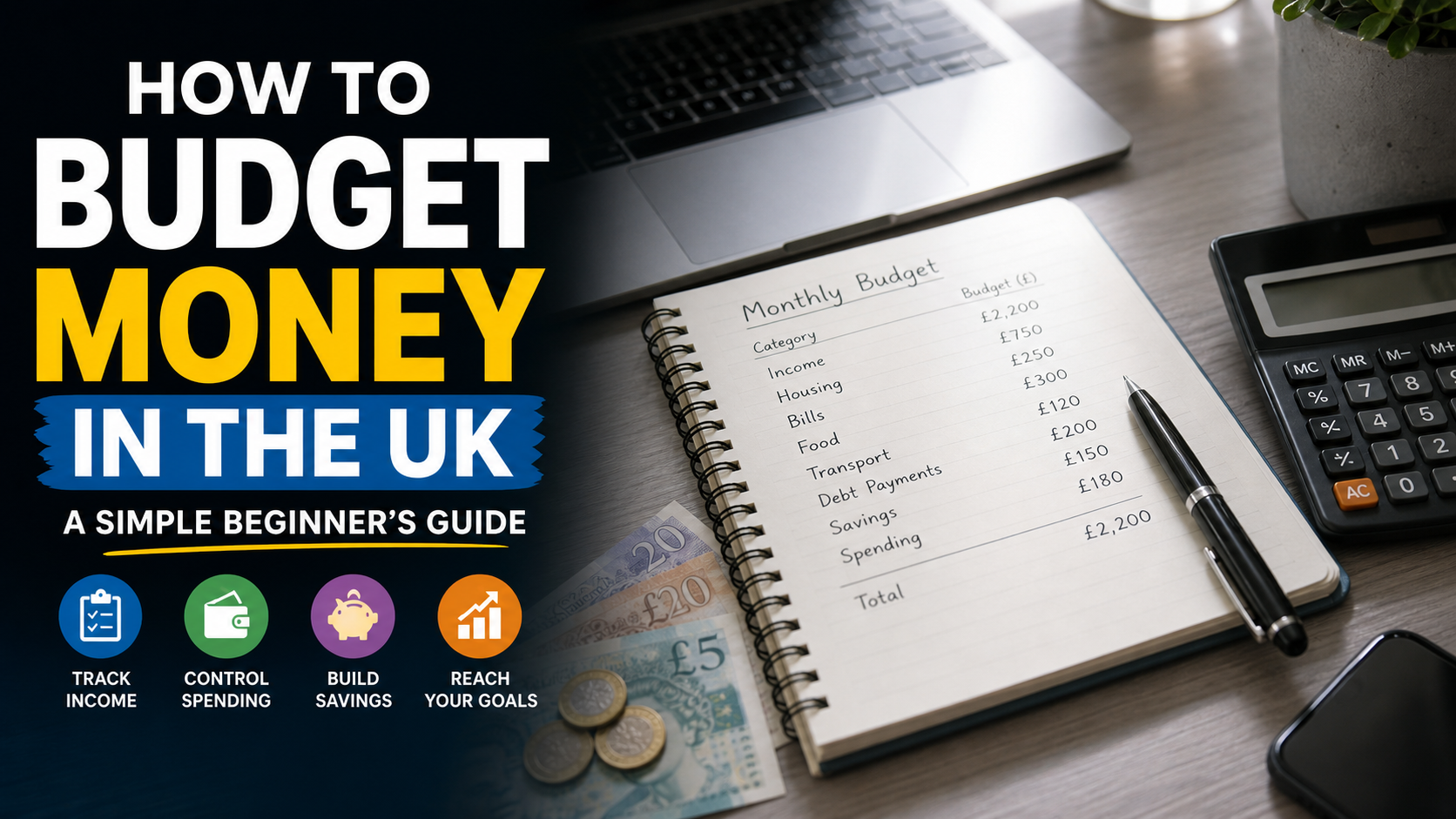
How to Budget Money in the UK: A Simple Beginner’s Guide
Finance Guide
Budgeting is not about restricting your life. It is about understanding where your money goes, giving every pound a purpose, and making better decisions before money runs out.
A lot of people avoid budgeting because they think it means cutting out everything enjoyable. But a good budget is not supposed to punish you. It should help you pay your bills, reduce stress, save money, manage debt, and still leave room for real life.
Think about it:
If you do not know where your money is going each month, how can you know what to change? Budgeting gives you visibility before problems become bigger.
Official UK budgeting links you may need
Useful links:
MoneyHelper: Free budget planner
MoneyHelper: Beginner’s guide to managing your money
MoneyHelper: Managing money using savings pots
Citizens Advice: Get help if you are struggling to pay bills
GOV.UK: Help to Save scheme
What you will learn
- What a budget actually is
- Why budgeting matters
- How to work out your monthly income
- How to track your spending
- How to separate needs, wants, debt and savings
- How to build a realistic monthly budget
- How to use savings pots
- How to budget when money is tight
- Common budgeting mistakes to avoid
Important:
This guide is educational only and is not personal financial advice. If you are struggling with debt, rent, bills, council tax, or essentials, consider speaking to a trusted debt adviser or using official support services.
What is a budget?
A budget is a plan for your money. It shows how much money comes in, how much goes out, and what you want your money to do before the next payday.
A budget does not need to be complicated. It can be a spreadsheet, notebook, app, banking tool, or simple list. The best budget is the one you can actually keep using.
Key idea:
A budget is not about being perfect. It is about being aware and intentional with your money.
Why budgeting matters
Budgeting matters because it gives you control. Without a budget, it is easy to spend without noticing, miss bills, rely on overdrafts, or feel like money disappears every month.
When you budget properly, you can see where your money is going and decide what needs to change. This can help with saving, debt repayment, emergency funds, investing, and reducing financial stress.
A budget turns money from something that happens to you into something you actively manage.
Step 1: Work out your monthly income
Start with the money you actually receive, not your salary before deductions. For most people, this means your take-home pay after tax, National Insurance, pension contributions, student loan deductions, and other deductions.
If your income changes each month, use a realistic average or start with your lowest expected monthly income. This makes your budget safer because you are not relying on money that might not arrive.
- Wages or salary after deductions
- Self-employment income
- Side hustle income
- Benefits or support payments
- Pension income
- Rental income
- Regular money from other sources
Try this:
Write down the amount that actually lands in your bank account each month. That is the number your budget should be built around.
Step 2: List your essential bills
Essential bills are the costs you need to pay to keep your life running. These should be handled before non-essential spending.
This includes housing, utilities, food, transport, insurance, phone, internet, childcare, minimum debt payments, and anything you genuinely need for work, health, or family responsibilities.
- Rent or mortgage
- Council tax
- Gas and electricity
- Water
- Food and household basics
- Transport
- Insurance
- Phone and internet
- Childcare
- Minimum debt payments
Key idea:
Essentials come first because missing them can create bigger problems later.
Step 3: Track your real spending
Many budgets fail because people guess their spending instead of checking it. Your bank statements and banking app can show what is really happening.
Look through the last one to three months of spending. You may notice patterns such as subscriptions you forgot about, frequent takeaways, impulse purchases, or small daily costs that add up.
Simple example:
Spending £5 a day on small extras might not feel like much, but over 30 days that becomes £150. Budgeting helps you notice these patterns.
Helpful link:
You can use MoneyHelper’s free budget planner here: MoneyHelper Budget Planner.
Step 4: Separate needs, wants, savings and debt
A useful budget separates your spending into clear groups. This makes it easier to see what is necessary, what is flexible, and what can be adjusted.
Needs:
Essential costs such as rent, food, utilities, transport, insurance, and minimum debt payments.
Wants:
Non-essential spending such as takeaways, shopping, subscriptions, hobbies, upgrades, and entertainment.
Savings:
Money set aside for emergencies, future goals, yearly bills, holidays, or long-term plans.
Debt repayment:
Minimum payments plus any extra money used to reduce balances faster.
Step 5: Build a realistic monthly budget
Once you know your income and spending, build a monthly plan. The goal is to decide where money should go before it disappears.
A realistic budget should cover essentials, debt payments, savings, and some flexible spending. If your budget is too strict, you may abandon it after one difficult week.
A budget that you can follow for six months is better than a perfect budget that fails after six days.
- Income
- Essential bills
- Food and transport
- Debt repayments
- Emergency savings
- Planned future costs
- Flexible spending
- Money left over
Step 6: Use the zero-based budget method
A zero-based budget means every pound has a job. This does not mean you spend everything. It means every pound is assigned to something: bills, food, savings, debt, spending, or future goals.
For example, if you take home £1,800 a month, your planned bills, spending, saving, and debt payments should also add up to £1,800.
Simple example:
Income: £1,800
Bills: £950
Food and transport: £350
Debt repayment: £200
Emergency savings: £100
Flexible spending: £150
Leftover buffer: £50
Check your understanding:
Does zero-based budgeting mean you have £0 in your bank?
Answer: No. It means every pound has a purpose, including savings and buffers.
Step 7: Create savings pots
Savings pots help you separate money for different purposes. Instead of keeping everything in one account, you can create separate pots for emergencies, bills, car costs, holidays, Christmas, or annual subscriptions.
This makes budgeting easier because planned future costs do not surprise you. A yearly bill becomes less stressful if you save for it monthly.
Simple example:
If car insurance costs £600 once a year, saving £50 a month into a car pot can make the bill easier to handle.
Helpful link:
MoneyHelper explains this approach here: Managing money using savings pots.
Step 8: Build a small emergency buffer
A budget is much stronger when it includes emergency savings. Without a buffer, every unexpected cost can push you into credit cards, overdrafts, missed payments, or borrowing.
Start small if you need to. Even £100, £250, or £500 can help protect you from minor emergencies while you build towards a bigger fund.
Key idea:
Emergency savings protect your budget from being destroyed by one unexpected bill.
Step 9: Budget for debt repayment
If you have debt, your budget should include all minimum payments first. Missing payments can lead to fees, interest, credit score damage, and more stress.
After minimum payments, you can decide whether to put extra money towards the smallest debt first for motivation, or the highest-interest debt first to reduce interest costs.
Debt snowball:
Focus on the smallest balance first to build motivation.
Debt avalanche:
Focus on the highest-interest debt first to reduce interest costs.
Important:
If you are struggling to afford minimum payments or essential bills, get help early. Do not wait until the problem becomes worse.
Step 10: What to do if your budget does not balance
If your spending is higher than your income, your budget is showing you a problem that needs attention. This can feel stressful, but seeing the truth is the first step to fixing it.
Start by checking whether you can reduce flexible spending, cancel unused subscriptions, switch providers, increase income, or get support with bills. If debt payments are unaffordable, seek help.
- Review subscriptions
- Reduce impulse spending
- Plan meals before shopping
- Compare bills where possible
- Check if you are eligible for support
- Speak to creditors early if you cannot pay
- Get debt advice if payments are unmanageable
Helpful link:
If you are struggling to pay bills, Citizens Advice has guidance here: Get help if you are struggling to pay bills.
Step 11: Automate what you can
Automation makes budgeting easier because it reduces the number of decisions you need to make every month.
You can set up Direct Debits for bills, standing orders for savings, and reminders for payments that cannot be automated. This helps reduce missed payments and makes saving more consistent.
- Automate bill payments
- Automate savings on payday
- Set reminders for irregular bills
- Move money into savings pots early
- Review everything once a month
The easiest budget is one that does not rely on willpower every single day.
Step 12: Review your budget monthly
A budget is not something you create once and forget. Your bills, income, goals, debts, and priorities can change. A monthly review helps keep your budget realistic.
At the end of each month, check what worked, what failed, and what needs adjusting. Do not treat mistakes as failure. Treat them as information.
Monthly budget review:
Ask yourself: Did I cover bills? Did I overspend anywhere? Did I save something? Did debt go down? What needs changing next month?
Budgeting when your income changes
Budgeting can be harder if you are self-employed, work shifts, receive commission, or have irregular income. The key is to avoid building your life around your best month.
Use a cautious income estimate, prioritise essentials, and build a buffer during better months. This helps smooth out the ups and downs.
Key idea:
If your income is irregular, budget from your lower income months and treat extra income as money for savings, debt repayment, or future bills.
Budgeting when money is tight
If money is very tight, budgeting alone may not fix everything. Sometimes the issue is not overspending, but income being too low for essential costs.
In that situation, focus on priorities: housing, food, utilities, essential travel, and urgent debts. Then check what support may be available and contact organisations you owe money to before falling behind further.
Important:
If your income cannot cover essential costs, do not blame yourself or ignore it. Get support early from trusted organisations.
Help to Save: support for eligible low-income workers
Some people in the UK may be eligible for Help to Save, a government savings scheme for certain people on low incomes. If eligible, it can add a government bonus to what you save.
Official link:
Check the scheme here: GOV.UK: Help to Save.
Common budgeting mistakes
- Guessing spending instead of checking bank statements
- Forgetting annual bills
- Making the budget too strict
- Not leaving any flexible spending
- Ignoring small daily costs
- Not saving for emergencies
- Treating credit cards as extra income
- Not reviewing the budget after payday
- Giving up after one bad month
- Trying to copy someone else’s budget exactly
Common mistake:
A budget that leaves no room for real life often fails. Build in a small flexible amount if you can, even while working towards bigger goals.
A simple monthly budgeting checklist
- Write down your monthly income
- List essential bills
- Check your real spending
- Separate needs, wants, savings and debt
- Set money aside for yearly costs
- Pay minimum debt payments
- Save something if possible
- Use savings pots
- Track progress weekly
- Review and adjust every month
Beginner takeaway:
A good budget is not about never spending. It is about spending on purpose.
Quick recap
- A budget is a plan for your money
- Start with your real take-home income
- Essential bills come first
- Tracking spending shows where money actually goes
- Savings pots help prepare for future costs
- Emergency savings protect you from surprises
- Debt payments should be part of the plan
- A realistic budget is better than a perfect but impossible one
Mini quiz
Question 1:
What is the first number you should build your budget around?
Answer: Your real take-home income after deductions.
Question 2:
Why should you check bank statements instead of guessing spending?
Answer: Because real spending often looks different from what people think they spend.
Question 3:
What are savings pots useful for?
Answer: Separating money for different goals, such as emergencies, car costs, yearly bills or planned expenses.
Question 4:
What should you do if your budget does not cover essential bills?
Answer: Prioritise essentials, contact organisations you owe money to, and seek trusted support early.
Final thoughts
Budgeting money in the UK does not need to be complicated. The most important thing is to understand your income, control your spending, prepare for bills, and make sure your money supports your real priorities.
A budget is not there to make you feel guilty. It is there to give you clarity, control, and a better chance of reaching your financial goals.
Start simple. Track what comes in, track what goes out, create a plan, and review it each month. Over time, small improvements in budgeting can lead to stronger savings, less debt stress, and better financial confidence.