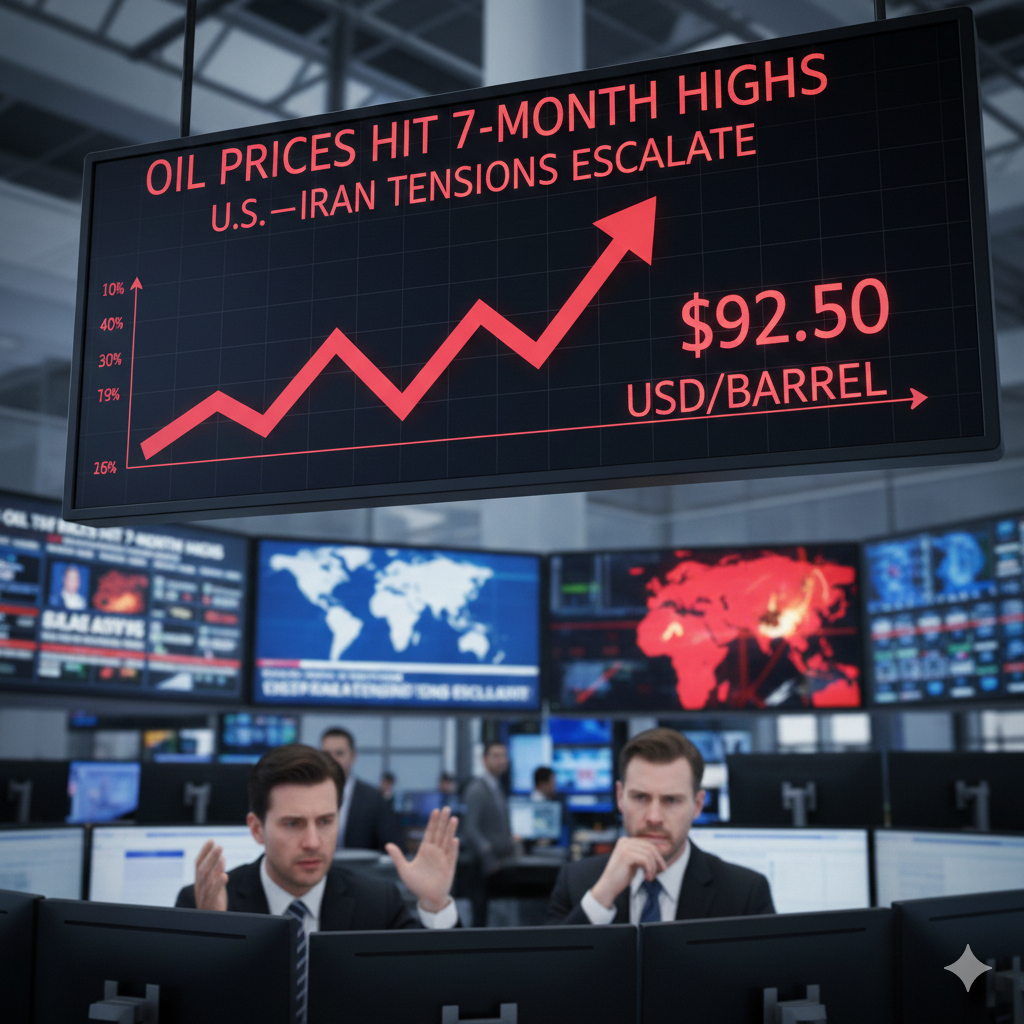
Global oil prices have climbed to their highest levels in seven months, as rising geopolitical tensions between the United States and Iran spark renewed fears of supply disruptions in the Middle East. With Brent crude trading at approximately $71 per barrel, markets are reacting to the growing uncertainty surrounding global energy supply and the potential economic impact of further escalation.
For investors and consumers alike, the recent surge in oil prices could have significant implications — from inflation and petrol costs to interest rates and stock market performance.
What’s Driving the Rise in Oil Prices?
The primary driver behind the latest increase in oil prices is geopolitical instability. Ongoing tensions between the U.S. and Iran have raised concerns that global oil supply could be affected if diplomatic relations deteriorate further.
Key factors influencing oil markets include:
- Potential sanctions affecting Iranian oil exports
- Risk of supply disruptions in key shipping routes
- Increased military and political tensions in the Middle East
- Concerns over global production levels
In addition, uncertainty around future negotiations between the two nations has created volatility in commodity markets, with traders adjusting positions in response to potential supply shocks.
The Role of OPEC+ in Market Stability
Another factor influencing oil prices is the ongoing role of OPEC+ in managing global production levels.
The alliance, which includes major oil-producing nations such as Saudi Arabia and Russia, has previously implemented output cuts to support prices amid slowing global demand. However, reports suggest that OPEC+ could consider increasing production from April 2026.
If production increases:
- Supply may rise
- Prices could stabilise
- Inflationary pressures might ease
However, if geopolitical tensions continue to escalate, any increase in output may not be sufficient to offset supply concerns.
How Rising Oil Prices Affect the Global Economy
Oil is one of the most important commodities in the global economy. When prices increase, the effects are felt across multiple sectors.
1. Inflation
Higher oil prices typically lead to increased transportation and manufacturing costs. These costs are often passed on to consumers, contributing to inflationary pressure.
2. Petrol and Energy Costs
Consumers may experience higher fuel prices at the pump. Increased energy bills can also affect household spending and disposable income.
3. Interest Rate Decisions
Central banks closely monitor energy prices when setting interest rates. Persistent increases in oil prices may:
- Slow progress in reducing inflation
- Delay potential rate cuts
- Influence future monetary policy decisions
Impact on Financial Markets
Rising oil prices can also influence equity markets.
Energy sector stocks may benefit from increased revenue potential, while industries reliant on fuel — such as airlines and logistics — may experience higher operating costs.
Investors may observe:
- Increased volatility in transportation stocks
- Gains in oil and gas companies
- Shifts in inflation-sensitive assets
- Changes in currency values
Market sentiment often shifts quickly in response to commodity price movements, particularly when driven by geopolitical events.
What This Means for Retail Investors
Retail investors may wish to monitor developments in energy markets, as fluctuations in oil prices can influence broader investment portfolios.
Possible considerations include:
- Exposure to energy-related equities
- Inflation-linked investments
- Sector-specific risks
- Currency market volatility
Understanding how oil price movements affect inflation and economic growth can help investors make informed decisions in changing market conditions.
Frequently Asked Questions
Why are oil prices rising in 2026?
Geopolitical tensions between the U.S. and Iran have raised concerns about global supply disruptions.
How do oil prices affect inflation?
Higher oil prices increase transportation and production costs, which may lead to rising consumer prices.
Could petrol prices increase in the UK?
If global oil prices continue to rise, consumers may experience higher fuel costs.
How does this impact interest rates?
Rising energy costs may influence central bank decisions on interest rates.
Do higher oil prices affect the stock market?
Yes. Energy companies may benefit, while fuel-dependent sectors may face increased costs.
Conclusion
Oil prices reaching a seven-month high highlights the influence of geopolitical developments on global markets. As tensions between major nations continue to evolve, energy markets may remain volatile in the coming months.
For investors, staying informed about developments in commodity markets can provide valuable insight into broader economic trends and potential investment risks.