Introduction
What Is A Stop Loss In Trading? How It Works And Why Every Trader Should Use OneMany beginner traders spend hours analysing charts in an attempt to find the perfect trade entry, but give little thought to how they will exit the trade if the market moves against them.
This often leads to one of the most common mistakes in trading:
Entering positions without any predefined risk control.
A stop loss is one of the simplest and most widely used tools available to traders for managing risk. Understanding what a stop loss is, how it works, and how to use it effectively is essential for protecting trading capital across financial markets such as forex, stocks, and cryptocurrencies.
What Is A Stop Loss?
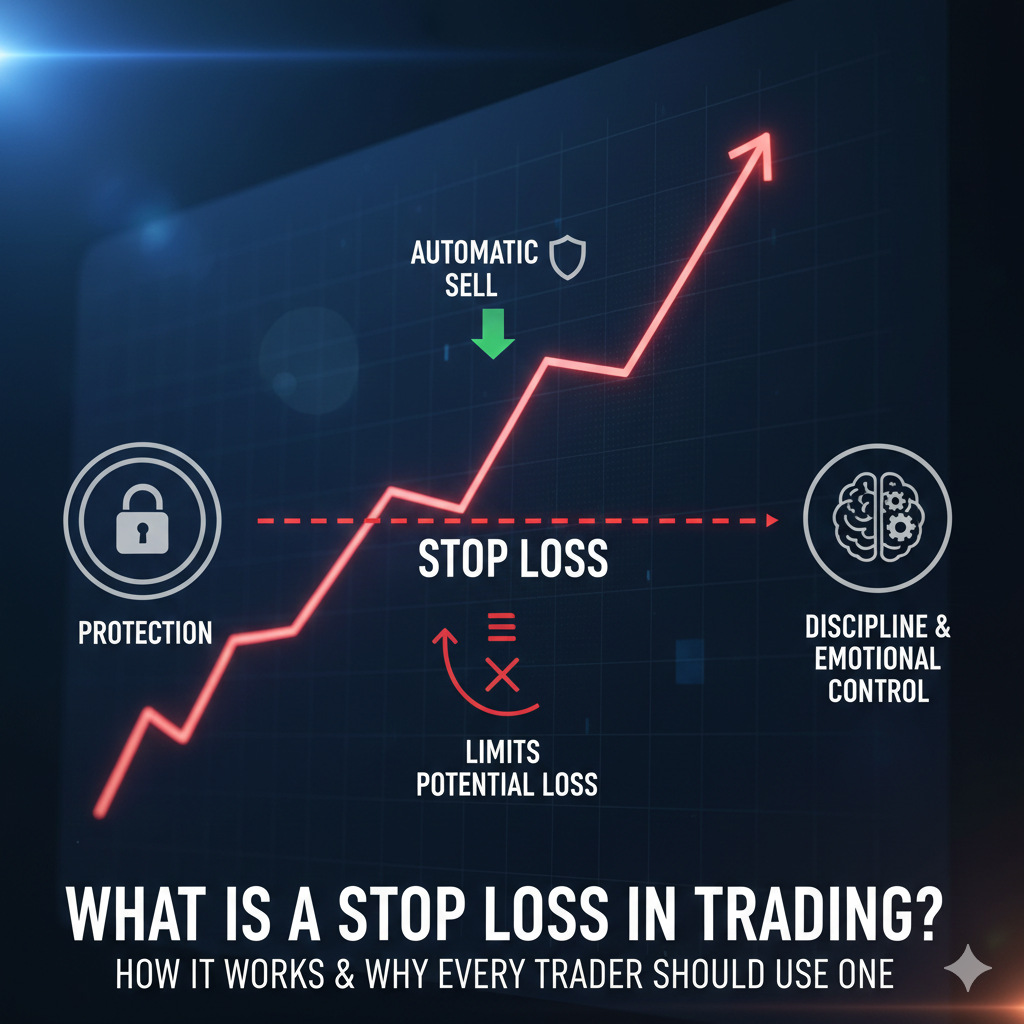
A stop loss[1] is an order placed with a broker to automatically close a trade when the market reaches a specified price level.
Its purpose is to limit the amount of loss a trader is willing to accept on a trade.
Instead of manually closing a losing position, a stop loss ensures that the trade is exited automatically if the market moves in an unfavourable direction.
Why Are Stop Losses Important?
Financial markets[2] are unpredictable, and price movements may occur rapidly due to:
- economic news
- market sentiment
- geopolitical events
- unexpected volatility
Without a stop loss in place, traders may remain in losing positions longer than intended, hoping the market will reverse.
This behaviour can result in:
- increased losses
- emotional decision-making
- significant capital drawdown
Stop losses help traders define risk before entering a position.
How Does A Stop Loss Work?
Assume a trader buys a currency pair at:
1.2700 GBP/USD
They may choose to place a stop loss at:
1.2680
If the market moves down to this level, the trade will be automatically closed.
This limits the loss on the trade to a predetermined amount.
Without a stop loss, the trader may allow the trade to continue moving against them, potentially resulting in larger losses.
Using Stop Loss In Different Markets
Stop losses can be used across various financial markets including:
- forex trading
- stock trading
- cryptocurrency trading[4]
In each case, the principle remains the same:
To exit a trade automatically when the market reaches a certain level.
This helps traders maintain consistency in managing risk regardless of the market being traded.
How Stop Losses Protect Trading Capital
One of the primary reasons traders use stop losses is to protect their trading capital from significant losses.
By limiting the amount of capital risked on each trade, traders may remain in the market longer and continue developing their trading approach.
Without risk control, even a few losing trades may significantly reduce account balance.
Emotional Trading And Stop Losses
Beginner traders often:
- move stop losses further away
- remove stop losses entirely
- hold losing trades in the hope of recovery
These decisions are typically influenced by emotions such as:
- fear
- frustration
- impatience
Using a predefined stop loss helps remove emotional decision-making from the trade management process.
Common Mistakes When Using Stop Losses
Some beginner traders may:
- place stop losses too close to entry
- widen stop losses during losing trades
- avoid using stop losses altogether
These practices may reduce the effectiveness of risk management[3] and increase potential losses.
The Role Of Risk Management
Stop losses form a fundamental part of risk management in trading.
By defining potential loss before entering a trade, traders may:
- maintain consistent risk levels
- avoid excessive drawdown
- preserve trading capital
Risk management plays a critical role in long-term participation in financial markets.
Conclusion
A stop loss is a tool used by traders to automatically close positions at a predefined level in order to limit potential losses.
While no trading strategy guarantees profit, managing risk through the use of stop losses may help traders protect capital and maintain consistency in unpredictable market conditions.
Understanding how stop losses function and applying them effectively is an essential step for beginner traders across forex, stocks, and cryptocurrency markets.